About John Roberts

John Roberts has been a member since March 2nd 2011, and has created 185 posts from scratch.

John Roberts's Bio

John Roberts's Websites

This Author's Website is

John Roberts's Recent Articles

VWO – Profit And More Diversification In Emerging Markets ETFs

In recent posts, we’ve been looking at ways to diversify our investments with ETFs focused in different areas. And here is another interesting one for you.

So, to diversify our investments even further, we can invest in emerging markets with the VWO Vanguard Emerging Markets Stock Index Fund. Investing in the VWO is investing in stocks of the emerging markets around the world, including China, Brazil, Mexico, Russia, South Africa and others. It has 4694 stocks, so buying VWO is buying a very large part of all of the emerging market stocks.

You can think of emerging markets as countries with not fully developed economies. And some may be poorer countries where many people live at a subsistence level. Also, their economies and stocks are often tied to natural resource production, which can be volatile.

However, people often invest in emerging market ETFs because they may be underpriced as the countries are developing, but may offer good investment returns in the future as they become more developed.

The VWO follows the FTSE Emerging Markets All Cap China A Inclusion Index. It pays a very healthy 3.70% dividend, which is more than double the average dividend of US stocks. And it has a low net expense ratio of 0.08%.

So it represents a large section of the Emerging Market stocks, is quite low in cost, and pays a nice dividend. And it’s been around since 2006, so it’s fairly well established.

You may recognize a few of the top stocks in the VWO holdings. These include Tencent, Alibaba, Infosys and Taiwan Semiconductor.

The ETF share value may swing up and down more than developed countries ETFs, because emerging markets are higher risk, but may also offer higher potential growth. But adding this Emerging Markets ETF to your portfolio can increase your diversification.

Here are some specifics about the VWO. Note they may vary a bit from today, but the overall size and general concept remain the same.

Indexed to: FTSE Emerging Markets All Cap China A Inclusion Index
Expense Ratio: 0.08%
Total Assets: $71.44 billion
Annual Dividend Yield: 3.70%
P/E ratio: 11.03
Fund Inception: 06/23/2006
Top Holdings:
• 2330.TW Taiwan Semiconductor Manufacturing Co Ltd
• 700.HK Tencent Holdings Ltd
• 9988.HK Alibaba Group Holding Ltd Ordinary Shares
• n/a Mktliq 12/31/2049
• RELIANCE.NS Reliance Industries Ltd
• 3690.HK Meituan Class B
• TSM Taiwan Semiconductor Manufacturing Company Limited
• INFY.S Infosys Ltd
• VALE3.SA Vale
• 939.HK China Construction Bank Corp Class H

So that’s the VWO Vanguard Emerging Markets Stock Index Fund.
To summarize, we use this fund to look abroad and invest in emerging markets around the world.

These are countries without fully developed economies. But they can have much potential ahead of them, as well as a number of potentially profitable companies too. And we just might want to invest in them.

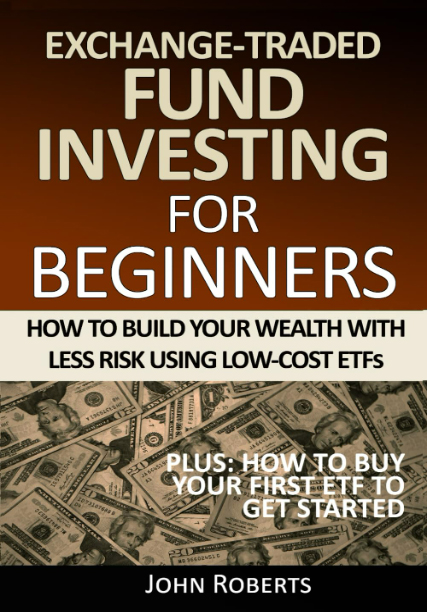
And if you found this sample chapter from my latest book interesting, you can learn more about ETFs in my recent book and preview it for free – Exchange-Traded Funds For Beginners for free right here.

VPL – Profit and Diversify In Asian ETFs

To diversify our ETF investments further, lets look at the VPL – Vanguard Pacific Stock Index Fund.  As the name implies, investing in the VPL is investing in the stocks of the Asia-Pacific region.  It has 2497 stocks, so buying VPL is buying a large part of all of the Asia-Pacific stocks.

People invest in international stocks like the Asia-Pacific fund to further increase their diversification.  Because, like we said, when the US stock market is down, the Asia-Pacific stocks may be up.  And that’s where Read the rest of this entry »

VGK – There’s Profit In International Stocks Too

Okay, so in prior posts we’ve just looked at US stocks.  But there’s a whole world out there, and it has many profitable businesses, and stocks, as well.

And we know that diversification within our US stocks can lower risk.  Because it kind of evens out the ride, i.e. when some stocks go down, others may go up.

Similarly, adding international stocks can increase our diversification.  Because sometimes when the Read the rest of this entry »

VB – Small Companies Might Have Big Growth

After looking at large companies stocks ETFs in recent posts, we have started looking into small company stock ETFs.  So why would we do that?  After all, large companies typically have well established products and a well-established financial history.

However, their big growth days may be behind them.  So investing in them is less risk, but perhaps less reward.  And so the value of their stock may be less volatile, swing up and down less, be more stable and less heart stopping.

On the other hand, people can invest in small, newer companies.  And they do that because their big growth days could still be ahead of them.  Of course, they don’t have as much Read the rest of this entry »

There’s Potential Big Growth In Small Cap Stock ETFs

Here’s another sample chapter from my latest book Exchange-Traded Funds Investing For Beginners.  The book has been well received, so I’ll, post a number of excerpts for your review in future posts.

And if it interest you, you can review the book for free right here.

We’ve been previewing the chapter entitled Different Types Of ETF Investments.  And in our latest posts we have looked at ETFs holding large companies stocks (large caps).  These companies typically have well established products and a well-established financial history.

However, their big growth days may be behind them.  And so the value of their stock may be less volatile, swing up and down less, be more stable and less heart stopping.  So investing in them is less risk, but perhaps less reward.

Small US Companies Stock ETFs (Small Cap)
On the other hand, people can invest in smaller, newer companies.  And they do that because their big growth days could still be ahead of them. Read the rest of this entry »