How Exchange-Traded Fund Investing Can Be So Cheap
One of the advantages of investing in Exchange Traded Funds (ETFs) is that most of them are cheap. By that I mean they have very low expenses. Which means more of your money is working for you.
So how do the EFT providers do that? To answer that question, we have to look at how they pick what’s in a fund, and how they manage it.
And there are a couple of ways. I think of them as the traditional way and the newer, cheaper way. And we’re about to look at both of them.
But first off, when the fund is started, it is given a general direction of what it is all about, i.e. what it is invested in.
Like if we were to start a technology fund, for example. We might say that the fund manager should pretty much invest in technology stocks like Microsoft, Apple, IBM, etc.
Or overall the fund direction is large US corporations, so the fund manager wouldn’t restrict it to technology only, but maybe invest in large companies like Amazon, Exxon, Berkshire Hathaway as well as Apple, IBM etc.
Then once the overall direction of the fund is chosen, they get down to specifically how the stocks are chosen for the fund, and added or deleted over time.
So let’s start with the traditional way that has been done.
THE TRADITIONAL WAY
Let’s say a fund manager is responsible for a technology fund. So the fund manager comes into work each day, and he researches various technology stocks, looking through their accounting and company performance to choose the ones he thinks will be the most profitable. And then he buys them.
And he looks at the stocks already in the portfolio and decides which ones might be losers, and which he should sell. So the fund manager is working every day, monitoring and researching and buying and selling the stocks in the fund to try to keep it profitable.
This is called active management and it’s how the providers of traditional funds have selected and maintained their funds.
And you can see it’s a pretty labor intensive job, with all of that research, and the markets changing every day. And of course the fund manager has to eat, so he is paid a salary, which is part of the expenses of the fund. And these expenses reduce the profitability of the fund.
So these actively managed traditional mutual funds charge between .5% and 1.0% for all of this work. Some are even higher but rarely exceed 2.5%.
Note that these expenses of the fund we are talking about are called the expense ratio. It’s the amount the provider (investment company) charges us to actively manage the investment portfolio.
It’s calculated by dividing the funds operating expenses by the average total dollar value of the assets in the fund. In general, .5% – .75% has been considered good, and anything greater than 1.5% is considered high.
But around 1976, some folks started thinking about a better way, a cheaper way, to do all of this.
A NEWER CHEAPER WAY
It was a better way, a simpler way, to create and manage funds.
They thought it might be simpler to just use some predefined lists of stocks to build a fund. In other words, kind of like if the fund managers could use a cheat sheet. And skip all that time consuming research and just make sure their fund always had the same stocks as those in the predefined lists.
And that would keep the expenses very low because no research or judgement would need to be done. Just keep the stocks in the fund the same as the list.
And as luck would have it, some predefined lists already existed.
They were called indexes, and some of them had been around for quite some time. Indeed, the very first one was called the Dow Jones Industrial Average – or Index. And it had been around since 1896.
So why was that index just sitting around out there waiting to be used.
INDEXES – A CHEAT LIST
Well, because even before ETFs, and funds, investors have always needed a way to tell how the overall stock market has performed from day to day. Is the market up from yesterday – that’s a good thing. Or is it down from yesterday – that’s a bad thing.
But with thousands of different stocks out there, how do you summarize all of that? What’s a simple way, at a glance, to know if the market is better / or worse than the day before.
And one way to do that is to pick a small list of representative stocks from all of those thousands, and average their stock price every day. And then just see if the average went up or down from the day before.
So back in May 26, 1896 two financial reporters named Charles Dow and Edward Jones picked the largest company in each of 12 industry sectors of the U.S. stock market, averaged their market price, and published the first value of the Dow Jones Industrial Average. The value of that first index was 40.94.
And that list / index of 12 companies average was how they could report the overall health and trend of the stock market to investors. With just one number. Pretty nice, yes.
So that index, all boiled down to just one number, was just sitting out there. But the important part of our story is that it came from a list of stocks. In other words, a predetermined, representative list of stocks. And isn’t that what we were looking for. Something a fund manager could just use as a cheat sheet.
So today the Dow is made up of 30 stocks representative of the entire market. And many more of those lists (indexes) have been created since the DOW. For example, one that included the top 500 U.S. companies was created in 1957 and is known as the S&P 500.
Now if you think about it, it would be pretty easy and cheap for a fund manager to pick one of those lists and create a fund invested in just those specific stocks. And it turns out that a number of academics and practitioners had been thinking this. They had been promoting the concept of a market portfolio for years, actually.
And someone finally took that idea and ran with it back in Aug 31, 1976. It was Vanguards founder, Jack Bogle, who created the first index-based mutual fund (called an index mutual fund). It was called the Vanguard 500 (VFINX), and is still in existence today.
And it created a low expense way to invest in the overall market. And its expense ratio is just 0.14% today. Wow. That’s three times cheaper than the cheapest mutual fund. Remember we said earlier that .5% – .75% was considered good.
By the way, this index fund idea was not real popular with the establishment at the time. They called it Bogle’s Folly. They felt it would only get average results and some even called it un-American. Of course, it also put pressure on them to reduce their fees, which may have had something to do with their negative opinion.
EXTRA CREDIT: Here’s the technical definition of “index fund” for those interested. An index fund is a type of mutual or exchange-traded fund (ETF) that tracks the performance of a market index, such as the S&P 500, by holding the same stocks or bonds or a representative sample of them.
Source: www.investopedia.com
MANY INDEXES MANY FUNDS
So it turns out that Bogle’s idea to use an index for a fund was a good one. And in fact you could get good results over time just by following certain indexes. Indeed, historically, most active fund managers do not beat the market average.
So if that’s the case, why not just invest in the overall market from an index list, save the expense, and do better. How good is that?
And so index based funds were born. Then when ETFs were created, most of them were based on this same index shortcut idea. And the ETFs were fast and easy to trade on the stock exchanges. So now we have many ETFs that are fast, easy and cheap – what’s not to like about that.
Some of the more widely used indexes are, as we mentioned earlier, the S&P 500 indexes and the Dow 30 indexes. There are also Nasdaq indexes, which are more technology stock oriented.
And there are also sector indexes with list of stocks in the financial sector, the health care sector, real estate sector, utilities, energy and many more.
So this is why, since their introduction, the number of ETFs has grown steadily worldwide. And why all of those indexes have led to many cheap, easy to invest in, ETFs.
CONCLUSION
And that’s how ETFs can provide a cost effective way to invest in many stocks (and other securities like bonds, precious metals, etc.) all at once. And how the top providers can be so cost effective.
So if you’re investing in ETFs, you can find funds that are low cost to invest in. And that, combined with their other advantages of fast and easy to trade, make them good investments for many people.
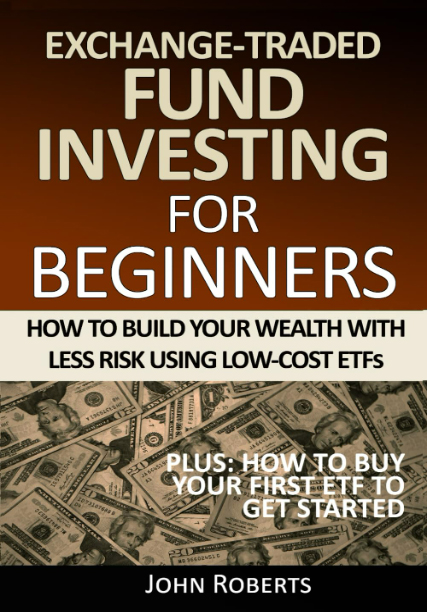
Also note that legendary investor Warren Buffet is invested in two of them. They are the VOO – Vanguard S&P 500 ETF and the SPY – State Street SPDR S&P 500 ETF Trust. I describe them both in my new book Exchange-Traded Fund Investing For Beginners: How To Build Your Wealth With Less Risk Using Low-Cost ETFs. If that gets your interest you can preview my book for free right here.
To your health and prosperity – John
P.S. Note that the funds and indexes mentioned in this article are not investment recommendations, but simply used to illustrate a range of ETFs for educational purposes.
P.P.S. Feel free to share this newsletter with your friends if you like.
DISCLAIMER
Please note that these articles are for educational purposes only and not to be considered personal financial, investment or medical advice — you should consult with licensed professionals for this. Also, while I am an active investor, I am no longer a licensed stockbroker or associated with any Broker-Dealer.
Limit of Liability / Disclaimer of Warranty: While the publisher and author have used their best efforts in preparing this letter, they make no representations or warranties with respect to the accuracy or completeness of the contents of this letter and specifically disclaim any implied warranties of merchantability or fitness for a particular purpose.